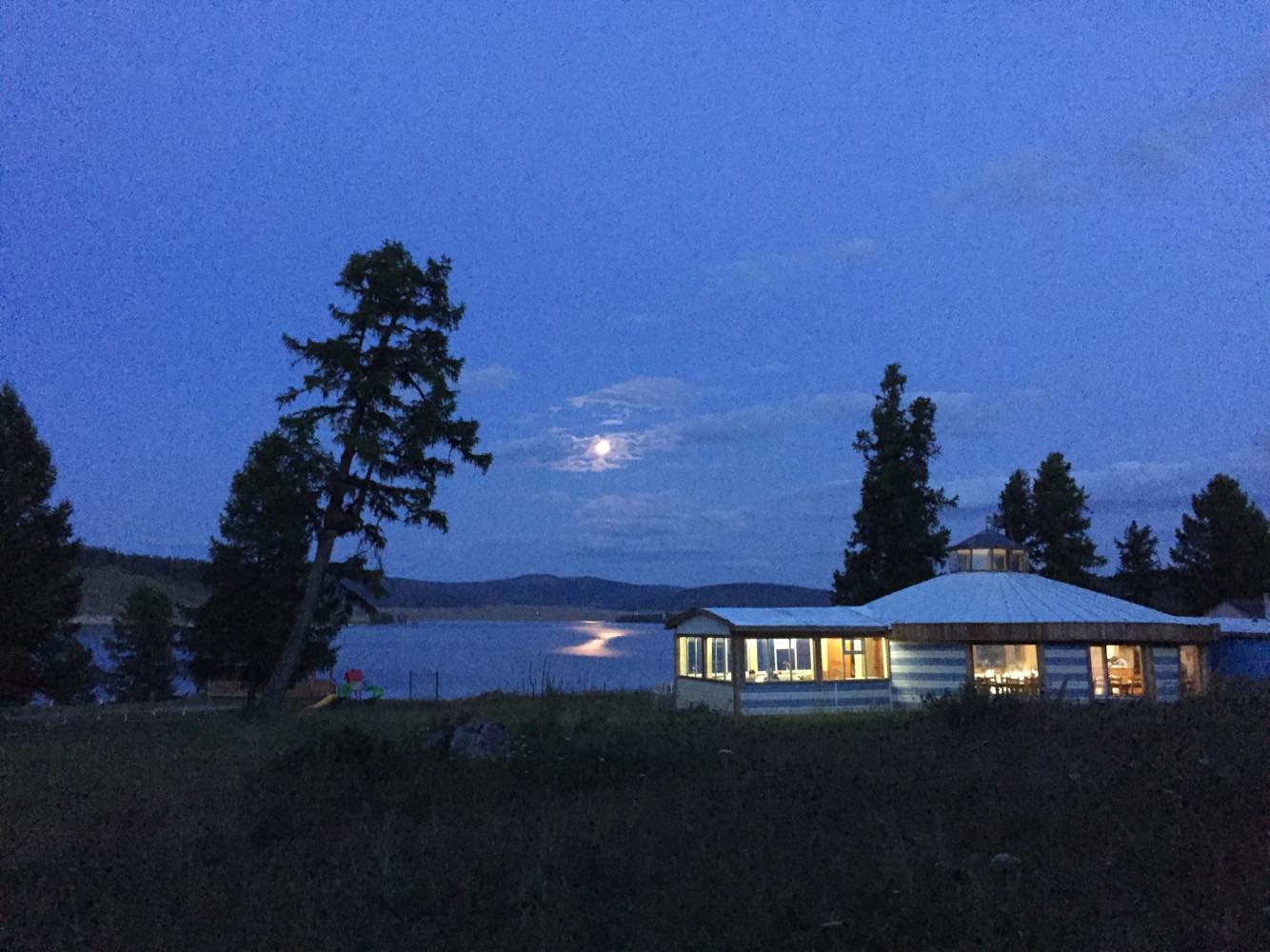
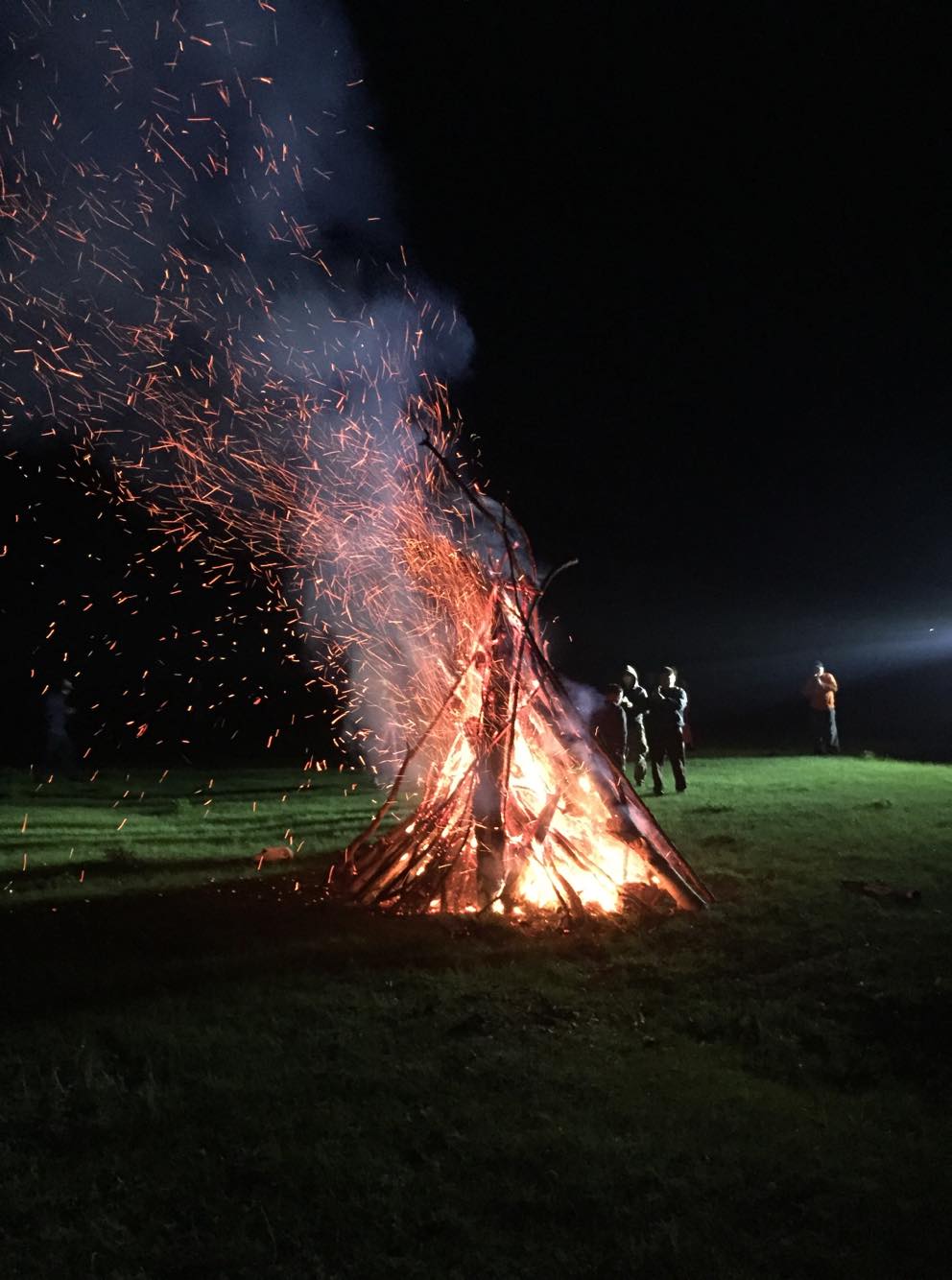
The Start: few days worth of updates

August 24th, 2019 –  Train Station, Ulaanbaator

I bought my train ticket yesterday, after the lady just announced that the train to Edernet was full: roll with it Chloé. One extra day in Ulaanbaator to hang out with Mongolian friends, use Internet while you have it, and do a last minute shopping trip. Turned out, I fried my laptop charger and was very glad to have a day to walk to “Computer Land” to find a brand new compatible laptop charger. Thanks to Globalization, I can even find Windows products in Mongolia – relief!

Train station. There is no turning back now. Folks looked at my strangely, some smiling curiously, a few bewildered as I wiggled my bike around trying to find my way to the damn “big” luggage room. There is no signs in English, I hold my train ticket written in cyrilic in one hand, almost as a weapon, to complement my gesticulations everytime I point at my loaded bike. I was so worried they would not accept my bike as it is that I had stomach aches throughout the afternoon. I wanted to avoid the hassle of putting my bike to pieces in a box and have it as formal checked luggage in the train, but my laziness certainly had the price of having to wait and hear the train officer’s verdict. I went to the awesome info kiosk where they have the only English word of the train station (and only English speaking staff): INFORMATION. Yes: that’s where I want to go. The lady is lovely and she laughs quietly when I asked if I could take my bike in the train nervously: she must have received three different calls from the Mongolian students I befriended during the program who helped me figure out how to get out of Ulaanbaator with my bike. It turned out to be too late to check in my bike –  my heart fell into my chest: I messed up, and would have to catch the train tomorrow instead? “No”, the lady answered: I could simply bring it myself to the big heavy luggage wagon situated at the end of the train. So off I went, to find the end of the train, still a bit nervous that my bike would not be accepted given my late minute appearance.

Once I got the the last wagon, I had to laugh at myself for being worried: how could I have ever worried about taking my bike on the train? Here I was, standing in the middle of piles of gigantic tractor tires, couches, ger furniture, and layers, layers of felt of gers. A bike would be the feather among the rest! I watched the train staff roll the big tires off the trolleys, and one after the other and bounce them from one’s arms to another’s arms to finally load them through the two wide-open metallic doors, their backs wet from the continued effort. Then it was the turn of furniture: the staff would disbalance one side of the couch, who laid like a king at the top of the neatly stacked pile of smaller items of furniture, and have it roll back towards the other side before giving it a one final good kick to have it slide off fully and down to the ground. What a team effort I was witnessing, there waiting patiently with my bike for it to be its turn. What I was also witnessing was symbolic of the ongoing and larger network of exchange between the city and the countryside of Mongolia, where goods available in the different regions are traded and moved between the two sites, often via relatives or acquaintances.  

Night of August 24th, in the train to Erdenet, from Ulaanbaator

It smells like Kimchi Ramen Noodle soup everywhere and two or three bottles of Toe fruit juice – or at least sweet tea – lay open on middle tables. It makes me hungry even if I don’t cherish particularly Kimchi Ramen Noodles. Most recently, a lady walked with a whole transparent garbage bag filled with ramen noodle soup bowls ready to be devoured by hungry train passengers. There is really a whole job sector existing around selling things in the train, starting from card decks to full meals and packaged fruits. People enter and walk through the train at stations, announcing loudly what they are selling. You have to act quick if you want something, otherwise they are gone.

Train ambiance is actually quite nice. Some folks are playing cards; chatting pretty much does not stop throughout the evening; the lady’s phone under me keeps ringing as she tries to call someone without success (and now plays a game with music that I hear through her headphones); some are lightly snoring already; All of us are in a relatively long and slow journey in the train. While some will hop off throughout the night stops, you always wake up with a few of your neighbors who started at the same station than you. Once the main train station in Ulaanbaator is passed, the upper sleeping tables start squeaking open, often with the help of a friendly neighbor who helps you unpin it. That is when open and free spots go, and you have to work on getting that sleeping spot straight away: climb up the small feet steps on the sides of the sitting seats and duck down under the luggage compartment to crawl on the dark red fake leather sleeping table. From up there, you can actually stick your face in the window, and it feels pretty vibrant to have the Mongolian winds caress your skin as you stare endlessly in the landscape passing you. If you get lucky, you might get offered a cup of coffee from one of the train attendants, which makes the ride even more enjoyable… until you have to visit the train toilet (less enjoyable, especially that train toilets are closed 30 minutes before entering a city and 30 minutes after… a one hour waiting period for the coffee pressing your bladder).

August 25th 2019, in my tent, passed Bulgan. Writing after eating sourdough bread with raisins with German Mozzarella cheese that had been so long packaged and waiting in the supermarket that mold had grown under the sticker.

So tired from biking winds face.

August 28th, 2019 – Erhel Nuur, Alpine Lake

I am munching on cabbage and bready Mongolian cookies in my tent, as the last colors of the day faint outside. I just realized that I cracked my laptop screen and that it is no longer tactile. Damn it, I totally had forgotten that my laptop was in my backpack, and it has been shoved around quite a bit although I have no memory of when it could have been hit/fallen hard enough. It seems like it landed on a rock as the glass sheltered like a spider web starting from the side. Oh well, it sucks but at least it is in the corner of the screen, and I can still read without being bothered. I need to find a cushioned spot for it now, so not to worsen the damages – maybe it should hang out in my clothes dry bag.

There are a few jeeps and motorcycles that run near where my tent is, but it’s just a dirt track. It kinda makes me nervous in some ways to be here alone, while many families and that weird redded-eyes guy on the motorcycle know that I am here alone. All the sounds outside are amplified by my mind and imagination: it’s most likely all good, just a bit vulnerable. Mongolia has been very safe and friendly so far; the hospitality culture and “looking out” for each other is quite strong, even towards foreigners who cannot even communicate with them. Cars have been stopping, cellphone hooked to a relative who speaks English, to check if I need any kind of help when only, I had only been taking a post-lunch nap. I was offered water and rides as I went up a massive climb today, or have been invited multiple times, only though a show of hands, fed and invited to sleep in the family’s ger. Even if Mongolia is the least densely populated country in the world, it seems like there is always someone somewhere. The fact that there are barely any trees enhances this feeling of intimacy within the immensity: here, we can see all the way up to the next mountains, and similarly on the other side. You’ll pretty much always spot a ger in the far away distance: just keep your eyes out for a white spot, it might be 10-15 km away, but it will be there. It’s reassuring to have these visual Qs in the landscape. I have yet to have felt isolated or in a “remote” place: even on dirt roads with no road signs, there are folks who are passing by. So what is it about a low density country such as Mongolia then? Well, it is the very very low impact on nature caused by human, and the low amount of cityscapes. Here, telephone towers exist only in villages and the electric lines pretty much always follow roads. You can see in the far far away without encountering dense human settlements. And because of its generous grasslands and steppes, there are no trees to block sight.

I am so tired now. It’s 9:35 and my legs feel mummified in my toasty down sleeping bag. I am typing under my headlamp’s patient watch while on my right side my bags surely lay in a big mess.  

Shifting Gears: Ready to hit the road!

It’s August 24th, and my last day for the next weeks into a sedentary and sheltered lifestyle. I’m now in the main square, sitting on a bench in with my backpack and bike panniers – or my modern “ger”. Same city, different experience. I’ll be sleeping in the train on my way to Erdenet tonight, but afterwards, I don’t really know where I’ll be sleeping: almost certainly I will be in my tent, somewhere along the road, in a convenient spot. In North American standards, Mongolia is essentially one big campground.

After walking to every single bike store and open air market existing in Ulaanbaatar, I’ve settled with an Alton Touroad that I found at the shop Alton Mongolia (see picture above for the bike). It was essentially the most affordable bike with simple mechanics that would hopefully not break down on me. The guys were super helpful and generous with their time there. Given the “mocha color” of the bike, I think it will earn the nickname of “modern camel” or “mechanical camel” – still have not set my mind on either or. I also did a “visa run” to China earlier this week which was successful in getting me a 60 days visa at the border. The border guard asked me if I liked Mongolia when he saw the exit stamp out of country fresh of one hour ago only. I told him that I loved Mongolia, and that was all I needed to re-enter the country.

Now that my international friends from the fieldcourse have gone, and that my Mongolian friends are going back to school or to work, it’s time to dive into what I have set time aside for: bikepacking. It’s pretty much the first year since I am 4 years old that I am not in school. While it’s been incredibly challenging and rewarding, it certainly became a comfort zone of its own kind, where schedule, calendar rhythm and daily routines was dictated by my academic endeavors. Now, there is much less ahead that I know of, and I have to make sure to stay accountable to myself and to my intentions.

I am about to reset my watch: from now on, time will count in terms of daylight hours only.

Fair winds from the Land of Eternal Blue Skies,

Migration as Experienced by Women & Children

The information in this article was drawn from the important and awesome work of some of my colleagues during ACMS fieldcourse. Shout out to Zaya, Batoo and Orchilon for their drive!

Women’s experience of migration from rural to urban areas proves to be particularly challenging in ways that differ from men’s experience of migration.

In the interviewees’ experiences, the decision to migrate was taken primary by the husband and his relatives, including the husband’s sister. Women’s daily activities in rural areas include caring for livestock, caring for the family, and caring for relatives. D’s* family had migrated three times, initially going to care for her husband’s parents who were ill and old. At that time, she was pregnant and ten of them lived all together in a ger with her in laws and the relatives’ kids. For her, it meant that the income was spent on her husband’s parent’s medication and very little money was left for family living. Even if she was pregnant at the time, she had little time to access the health services needed.

D’s* experience of migration highlights the particular gendered challenges that come with the decision of moving. The challenges that women faced throughout the process of migration can be divided in four stages: during the migration, initially after settling down, short-term and long-term. When speaking of the migration process, one of our interviewees mentioned that the moving process took about 20 days: they were moving their herd as well as their belongings. Apart from helping with the migration process, women are expected to care for children and cook – two tasks that our interviewee described has hard to perform when moving. Moreover, money was running short both during and after the move, which limited her capacity to care for children. After initially settling down, one of our interviewees mentioned that it “felt like someone else’s place” and that her family “felt like outsiders”. Other initial challenges include little access to information, lack of support and lack of access to social services. On the short-term, registering children in school proved to be difficult. On the long-term, women continue to experience difficulties even after moving to an area in the hopes of improving their living conditions. Some of these difficulties include accessing adequate health care & fighting the isolation that comes with living in a new area.

“So long as we are still in Mongolian Territory”: The Concept of Home Among Internal Migrants in Mongolia

This research was done in collaboration with fellow colleagues from the ACMS fieldcourse: Dono; Nancy; Stephany and Tumi.

We all have cultural blinders. When doing anthropological work, or simply when one encounters a person from a different background than ours, we must engage in reflexivity and consider the ways in which our background shapes our worldview, assumptions, understandings and ways of life. This goes beyond mere “open mindedness”, it is about celebrating and acknowledging the multiplicity of experiences and worldviews, and importantly, recognizing that ours is infinitely narrow. After having been in Mongolia for a week, it became evident that I came here assuming that semi-nomadic folks might have different concepts of “belonging” to place or concepts of “home” given their lifestyles. Rather than just noticing my assumption, I decided to engage and negotiate with it. I was also curious to know how “home” played out in the experiences of people who migrated from one part of Mongolia to another while having a semi-nomadic background. Along with a few of my colleagues from the American Center for Mongolian Studies field-course, we started to ask: in what ways does the definition of home change with mobility?

I think it is important to ask this question because we must investigate the “home” as a space beyond a sculpture of felt and wood but rather a space of symbolic meaning, reflective of cultural rules, values and grounded in multiple scales of geographies starting from the individual to the larger community and to a broader homeland. Particularly, our team was interested to see the continuum, forms of negotiation and changes that occur in people’s relationship to the concept of “home” and “homeland” as folks migrate internally across Mongolia. After conducting some interviews with families who had migrated internally, our team came to argue that the concept of home fits into peoples’ broader migration narrative, where migration does not start with seeking a home, but rather through migration people happen to expand the definition of “home” to include physical, emotional and other intangibles.

To ground our investigation in the broader literature, I want to briefly introduce you to David Harvey’s three categories of space (2005). I want to bring Harvey into the discussion because his theory helps us think about “home” thematically and at different layers, helping us to capture the multiple layers of experience. As you will see later on, people who migrated touch on different aspects of space, helping us capture what “home” means to them. The first way to understand space is through the cartesian approach, or what Harvey coins as “absolute space”: it refers to the material space, including descriptions, locations, measurements, and feelings related directly to the site (ibid.). The second way to understand space is through a “relative” approach, which includes our experience of time, distance, social conventions and emotions with the site. When thinking of “relative” space, we ask: “what do we believe this site to be?” (ibid.). This way of understanding space is important as it seeks to incorporate perspective (human or geographic). With “relative” space, we think of mobility, exchanges, circulation and flows of people and good into the site (and how long it takes them, how they get there, etc.) (ibid.). The third way of understanding space is as “relational space”, which seeks to capture relationships (ibid.). That is: space is not a dead surface, it is cushioned by stories, feelings, and other non-material things that occur in space such as sounds, odors, feelings (eg. fear) and social relations (ibid.). Thinking of “relational space” helps us to think about people’s experiences, the real experience, or the one filtrated through memory or imagination (ibid.).

The following section will outline the main themes concerning “home” that came out of the interviewees with folks who migrated, organizing by scale size, starting from the most intimate and expanding to include broader scales.

The Concept of Home

Home was described a relaxing and intimate space. The home allows its inhabitant to find peace, to find unity with oneself. This ‘peaceful’ and ‘serene’ notion of the house contrasts with the public and socially engaging notions. The ger, although a fundamentally shared space given the inexistence of divisions, provides shelter and closure away from the otherwise bare and open landscape of Mongolia. Yet, there are very blurry boundaries between the ger and the outer landscape when considering “home”: indeed, ‘home’ was intertwined between the geography of the ger and the beauty of nature in the countryside. All of our interviewees vouched for the beauty of the nature as one of the reasons they settled down, but also as one of the reasons why they feel happy where they are. One of our interviewees mentioned not feeling at home in his son’s apartment, although all the conveniences were present, given the constrictions of the apartment and of the city that were stressful and limiting to him. Moreover, the landscape of “nature” inspires relaxation which contrasts with the bustling city.

Home is a site where values and socialization occurs: this is what creates comfort, convenience and reproduces ways of being in space. As an “outsider” is was evident that I had never been socialized into behaving according to specific values linked with space: I had to “learn” what to do when engaging with the site of the “ger”, practices that my Mongolian colleagues did not have to “learn”. For instance, one has to bend down to fit inside the ger door and step over the door with their right foot. One goes clockwise inside the ger, and should not go through the poles as they represent the unity between the husband and the wife. The lefthand side of the ger is often reserved for guests, while the hosts sit on the right side. The altar, if one is present, is on the opposite side of the door. Polite ways include: not putting your hat lower than your torso if you are to remove it; or accepting and eating food that is offered. Above accepted behaviors, the home is a space where children grow up and where knowledge transmission occurs before they choose to leave.

Having migrated, folks described “home” as including multiple specific special sites that come to fit in a broader life narrative, where sites intertwine with important life milestones. These sites include place of birth, or places where one has met their life partner, where children have been born, and places where one has lived before. In Mongolian language, “birth place” and “homeland” merge into the word “nutag”, emphasizing where one comes from. This homeland often stays significant after migration because of relatives who continue to live there. Although interviewees mentioned specific sites as “home”, they also argued that home is intangible and not bounded to a specific place, but rather bounded to the broader land of Mongolia. Moving internally was still conceptualized as remaining “home”, as one stayed within their homeland.

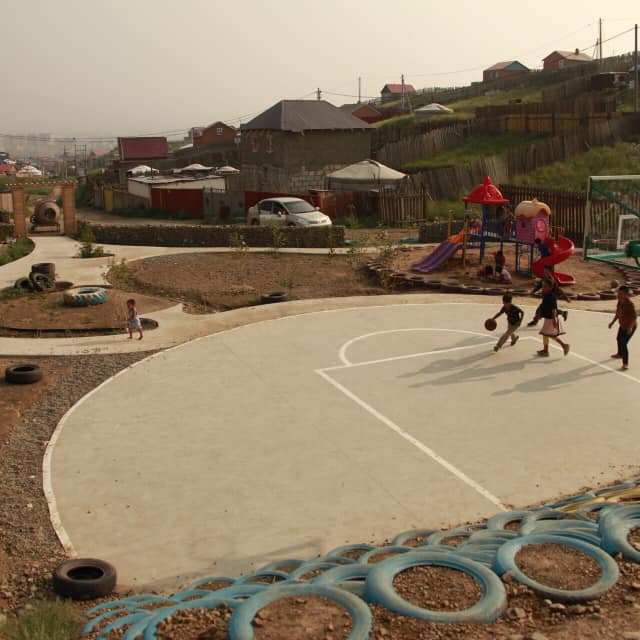
Home is also understood via the lens of community and support networks. Family is a key unit for Mongolians, and home is often enmeshed with living relatives. The very own geography of the ger speaks of itself: a ger is shared by all its members and does not have any division. This geography reflects how family is often conceived as the smallest unit existing: there is no accurate translation into Mongolian for “individuality”. When asked about “individuality” and importance of “the individual”, our interviewees answered through the family unit. When migrating, a sense of home was lost by going away from relatives, but re-gained once one established a new social network, or when relatives moved in the area. Our interviewees mentioned moving to be with relatives or care for elderly, highlighting a great sense of responsibility and accountability that comes with community and the family unity. In the ger districts of Ulaanbaatar, community building also took the form of community projects, such as the Green Lake Project, which restored a dump site into a lake where families go skating or boating. The leader of this initiative was looking into creating a public space where people can meet one another, as public spaces are largely inexistent in ger districts, given the unplanned nature of the districts. For him, such project contributed to create a sense of community and dialogue across neighbors who often don’t see each other, as fences are built up everywhere in ger districts.

After migrating to a new area, home exists in the broader network of exchange across sites that continues to occur. By settling down in a new area, people maintain links with their previous sites, and increasingly so with cellphones and modern communication devices, facilitating a network of teaching, learning and product exchange. Indeed, people who migrated to the city send goods such as electronics, tobacco, fruits, flowers and other goods to the rural area, while people living in rural areas send meat, dairy products and other animal products. Children often spend summers out in the countryside where they engage with herding practices, and exchange worldviews with folks living in rural areas. An interviewee mentioned that he learned to read text messages from his grandchild, and that although he finds young people’s ways of talking offending, that one should adapt and be open to the changing society and worldviews. These exchanges of knowledge contribute to both the continuity of practices throughout migratory processes, but also exhibit negotiations and interferences with global cultural flows.

Finally, “home” exists and is fed by memory and imagination, creating a form of parallelism between important sites. One of our interviewee mentioned maintaining his birth place alive in his mind by thinking of the nature there as he was going through changes in season in his new living place. He mentioned that his birth place was always on his mind, even if he has not gone back for 10 years. These statements highlight not only the role of memory, but to a certain extent the role of imagination in conferring new attributes and creating new narratives attached to a place one remembers.

Other things to think about

For the families who moved from a rural area to another rural area, their semi-nomadic practices and herding lifestyle continued. That meant that they maintained a certain mobility spectrum throughout the year, averaging about 40 km: they have a seasonal migration where they move to different camps based on the time of the year. They usually return to these camps year after year. The winter camp is the most sheltered from winter storms, whereas the summer camp is often in lower pasturelands. Thus, we can say that “home” exists within a mobility spectrum.

I also want to highlight that while most folks who migrated hoped to see their living conditions improved, it was not always the case, nor was it a straightforward path. Some of the families we talked with had to sell their herd, including their best animals, to move or to respond to a family emergency. Families who moved multiple times had to start from scratch over and over again, which was extremely challenging for them and considerably reduced their livelihood. Throughout these migratory processes, these families also engaged in the process of recreating a home, although that was not an intentional nor their main pre-occupation: they were concerned with some of the reasons that pushed them to migrate, and concurrently had to engage with the process of home-creation as they migrated.

Conclusion

The concept of home fits into peoples’ broader migration narrative, where migration does not start with seeking a home, but rather through migration people happen to expand the definition of “home” to include physical, emotional and other intangibles.

A Brief Literature Review to Get Us Thinking about Global Cultural Flows & Deterritorialization in Ulaanbaatar

Image result for ulaanbaatar

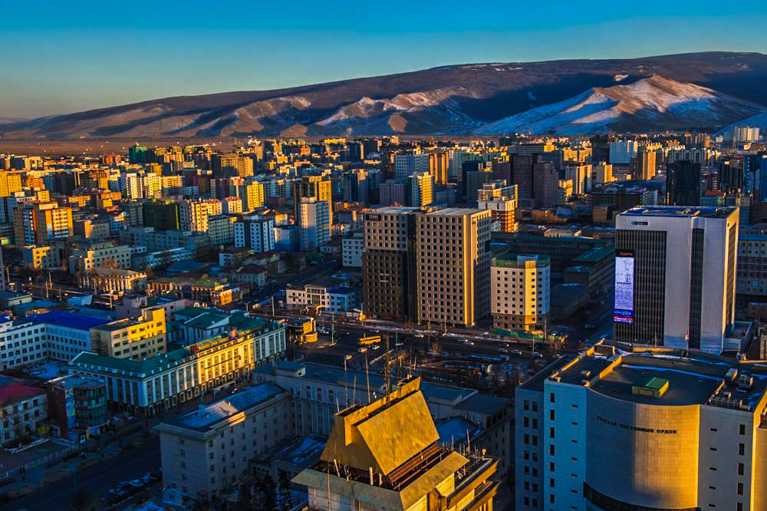
I went out of the city for the weekend and came back in. The contrast between the countryside and the bustling, vibrant, crowded Ulaanbaatar is striking. I have been thinking about how do people who migrate from rural areas to urban areas deal with such a sharp contrast in lifestyle, and what are the strategies that communities experiencing global cultural flows, such as the ones living here in Ulaanbaatar, use in order to avoid the dissolution of their ties to localities, places and ways.

There are plenty of scholars who think about similar questions. So I dug in and visited my good old anthropologist friends to see what they’ve been thinking about. In the following paragraphs, you will find a brief literature review on the question of deterritorialization, globalization and strategies to maintain ties to localities. Mainly, it will be argued that personal and cultural identity is enmeshed with place, informing the localization of global flows.

First, global flows can be absorbed locally by communities and become ‘heterogeneous dialogues’, or ‘indigenized’ (Appadurai, 1996; Sahlins; 1999). This process can be considered a form of resistance, since global ‘scapes’ have to adapt to the new context and negotiate between openness to global flows and the communities’ will to keep cultural identity. Appadurai writes: ‘this is true of music, and housing styles as much as it is true of science and terrorism, spectacles and constitutions.'(ibid., 32). Yet, the relationship between local and global is one of ‘disjuncture’, implying a complicated relation between both : ‘instruments of homogenization that are absorbed into local political and cultural economies, only to be repatriated as heterogeneous dialogues of national sovereignty, free enterprise and fundamentalism´ (ibid., 42).  Moreover, global culture is made manifest in national politics, these bodies enacting universalization – but are resisted through riots, refugee flows, and autonomous/independent communities (Scott, 1990). Nevertheless, it is important not to romanticize political resistance, as states have the monopoly on violence and can perpetuate ethnocides or other violent forms of repression (Appadurai, 1996). In the context of deterritorialization, communities may adopt new ‘scapes’, but desire to craft the ‘family-as-microcosm of culture’ may play out against other forms of cultural reproduction (ibid., 45). Thus, cultural identity is negotiated with global flows, both at the political and personal level (Escobar, 2001).

Secondly, production and reproduction of personal and cultural identity is a form of resistance against global flows since it is place bound (Escobar, 2001). Indeed, cultural practices are set in places, and communities attempt to keep their ties to localities through their reproduction. For exemple, local knowledge is a form of place-based consciousness, grants the world with meaning, and identifies individuals with subjectivities (ibid.). Drawing from Harvey (2005), it is possible to show a mutualistic relationship between people and their environment : a ‘place’ is filled with meaning given by individuals/communities, and grounded in social and environmental practices. Nevertheless, mobility, displacement and deterritorialization show that culture is not limited to a given place : rather ‘imagined communities’ are attached to ‘imagined places’ (Akhil and Ferguson, 1997). While mobility destabilizes fixed identities, non-local and local processes continue to produce culture as symbolically anchored to a homeland (ibid.). For example, ‘remembered’ places use memory to continue constructing some boundaries around a homeland (ibid.). More importantly, production of place and culture continues to be local : in the Caribbean, migrants continue to come back to their home island for shared maintenance of family land and visit their house back on the island (Escobar, 2001). These examples show that while migrants embody transnationalism, they use external or global conditions as a way to defend and construct boundaries around the local.

Third, social movements and subaltern strategies of localization are attempts to resist global flows (Scott, 1990). Indeed, people mobilize politically around individual and collective identities, which can result in the opposition of the local against larger political and economic interests (Lovell, 1999, in Escobar, 2001, 149). Similarly, Friedman (1997) claims that social movements destabilize the homogeneous entity of the state or transnational networks, working against ‘culturalism’ i.e., a globalizing strategy aiming at imagining cultural communities. Moreover, integration into a larger networks does not necessarily translate in the strategies of social or cultural survival, as some communities are ‘endosocial’, meaning that they are tied internally, and remain unaffected by the governing state. In Hawaii, the village of Miloli’i is integrated in important ways to the rest of the region and to the United-States, but the social relations of the village are centripetal, organizing internal relations among villagers and rendering them inaccessible to outsiders (Friedman, 1997, 285).  Thus, social movements can be complemented by strategies of localization, resulting in the insulation of communities – regardless of their integration in larger networks. 

Finally, boundaries construct the cultural proof of localities, authorizing fixity and exclusion. For Douglas (1996), their imagination constructs an ‘idea of “society” ‘ , while maintaining margins and internal structure separated from the external – arguably global flows in our case. These boundaries foster a place-based lifeworld, in which hands-on activities and social life are organized and shared among individuals. According to Yang (1999, 5, in Escobar, 2001), boundaries show that not everything comes from global flows, and often oppose capitalism: they sustain diverse economies, such as subsistence economies, and local initiatives. Boundary-production facilitates the production and reproduction of communities” lifeworlds and worldviews, which are inversely tied to the ‘imagined communities’ and/or ‘imagined places’ .

In brief, strategies of resistance allow for personal and cultural identity to be connected with place, facilitating a ‘localized global’ (Escobar, 2001; Friedman, 1997).

About Rural-Urban Flows of People and Resources into Ulaanbaatar’s Ger Districts

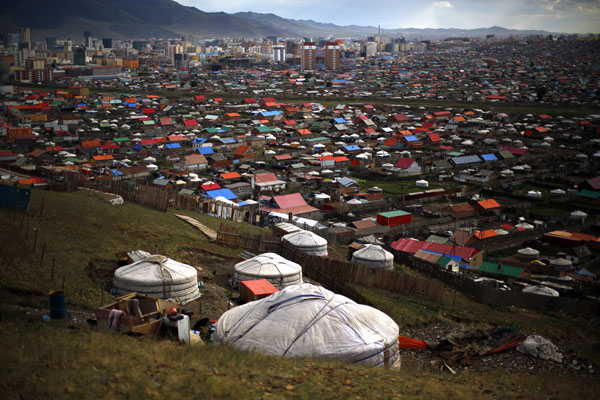
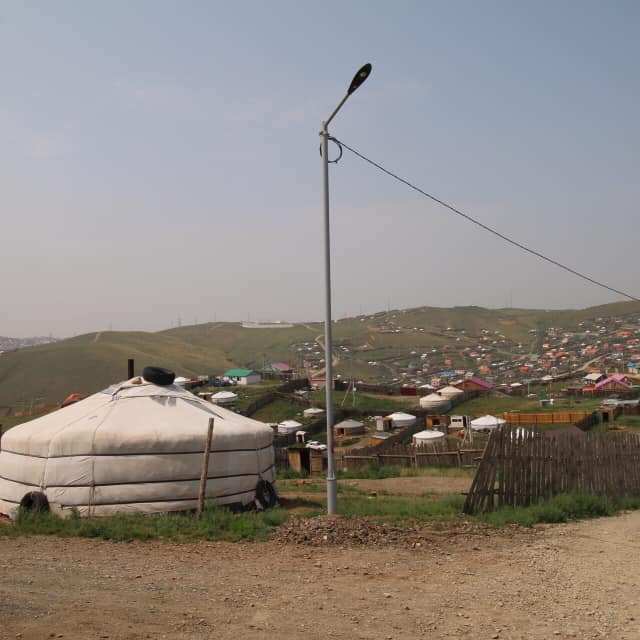
A ‘Ger’, at traditional Mongolian tent is seen on a hill at an area knows as ‘Ger District’ in Ulan Bator June 22, 2013. Mongolia’s capital faces one of the biggest housing problems in the region with a 60 percent of the population living in settlements knows as ‘Gers Districts’; in many cases with difficult access to water, sanitation and basic infrastructure, according to data from the World Bank. In the last decades Ger districts in Ulan Bator has expanding so rapidly that these are no more considering informal settlements but legal residential areas. Every year between thirty to forty thousand people migrate from the countryside to the capital, According to a 2010 National Population Center census. Mongolia is the world’s least densely populated country, with 2.74 million people spread across an area three times the size of France, two-fifths in rural areas on wind swept steppes. REUTERS/Carlos Baria (MONGOLIA)

Migration to Ulaanbaatar city has exponentially grown since the transition to democratization after the collapse of the Soviet Union in 1990, as people were given freedom of movement, which was not the case under soviet centralized planning during which families were dispatched across different provinces in Mongolia.

Drivers of Migration

Expectations, structural circumstances (e.g. policies and institutions) and external circumstances tend to combine to become a reason to migrate. Overarching personal decision making and expectations are structural circumstances. These have to be stressed over personal decision making, as structural circumstances bind, facilitate or push people into personal decision making. The biggest drivers of migration from rural to urban sites in Mongolia include employment; educational opportunities; family obligations; health service access; shifting ways of life; economic reasons, including having loss one’s herd due to harsh winters (dzud). Families and relatives play an important role in decision-making when it comes to migrating, and often are supports in facilitating adaptation and providing information access. Moreover, the development focus in Mongolia is in Ulaanbaatar, centralizing and concentrating opportunities and resources in the capital rather than equitably distributing them around the country. For instance, there is none or only occasional help if herders lose their herds due to harsh winters, forcing them to integrate into the capitalist economy by moving to the city to sell their labor to a third party. Overall, there is a lack of policies and institutions to make structural equality and ensure the equitable distribution of resources across the country. The following life history illustrates the interplay between circumstances and expectations in migrant’s decision to move:

Zaya* was born in Uvs Province in a relatively underdeveloped infrastructure area and had poor access to education to services. The person knew little about the new destination, Darkhan, but had a sister and relatives living there, helping to access information. There was also market access to sell products. The herding lifestyle could be continued given the land accessibility outside Darkhan. The interviewee considered moving to Ulaanbaatar for educational opportunities but the limited access to information there was a barrier to a new migration. Yet, possible income in Ulaanbaatar would be uncertain and precarious. Moreover, herding in Ulaanbaatar is banned, requiring a shift in livelihood and uncertain or precarious income levels.

Ger Districts in Ulaanbaatar

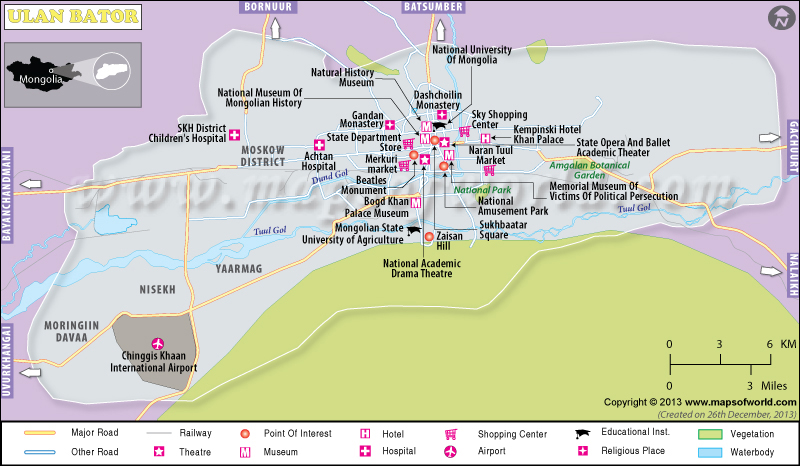
Upon arrival, most migrants move in their ger and settle in the ger districts surrounding Ulaanbaatar, where 60% of the city’s population live. The ger districts use up 50% of the land in Ulaanbaatar, even if little urban planning goes into these areas. In average, migrants relocate three times before settling on their current place. There is no official registration when migrants choose a piece of land to settle on: they settle on inhabited land and after a few years, migrants are able to claim a land title. Until then, there is no legal safety net for the land, apart from the fact that all Mongolians are entitled to land under Mongolian constitution.

Ger districts present issues such as: health and security issues; polluted and neglected neighborhoods; and safety hazards in ger districts. Moving in an apartment building is seen as a symbol of social mobility and something people look forward to only if they come to have financial ease. Migrants come with expectations such as: economic opportunities, availability of employment, high salary and owning land. However, as they settle down, these expectations are not always met and migrants come to face multiple challenges, including lack of governmental support; contextual vulnerability; lack of information and difficultly registering. In accessing health care services for instance, there exists confusion and poor information as to where to go, how to register, and how to deal with bureaucracy in public medical center. People reported needing connections and paying bribes to access public hospital services. In finding employment, migrants struggle due to the lack of quality of employment; employer scam; age discrimination; or the lack of kindergarten access.

Since 2017, the city of Ulaanbaatar has banned new migrants to come to the capital in an effort to combat the urban sprawl, poor infrastructure and urban planning capacity, and air pollution. Drawing from a community assessment on migrant vulnerability published by Public Lab Mongolia, the ban on migration in Ulaanbaatar has increased the vulnerability of unregistered migrants living in Ulaanbaatar’s ger. While this ban is in place and migration figures have dropped, some people failed to register before the officialization of the ban or have settled after the ban was put in place. D Status of migrants in Ulaanbaatar often described in the available literature by the following key words: vulnerability; social exclusion; multi-dimensionally poor; limited service accessibility. Vulnerability is exacerbated in the case of unregistered migrants as service access and land ownership in Ulaanbaatar is limited and conditional to the registration status of migrants.s Experience of Migration

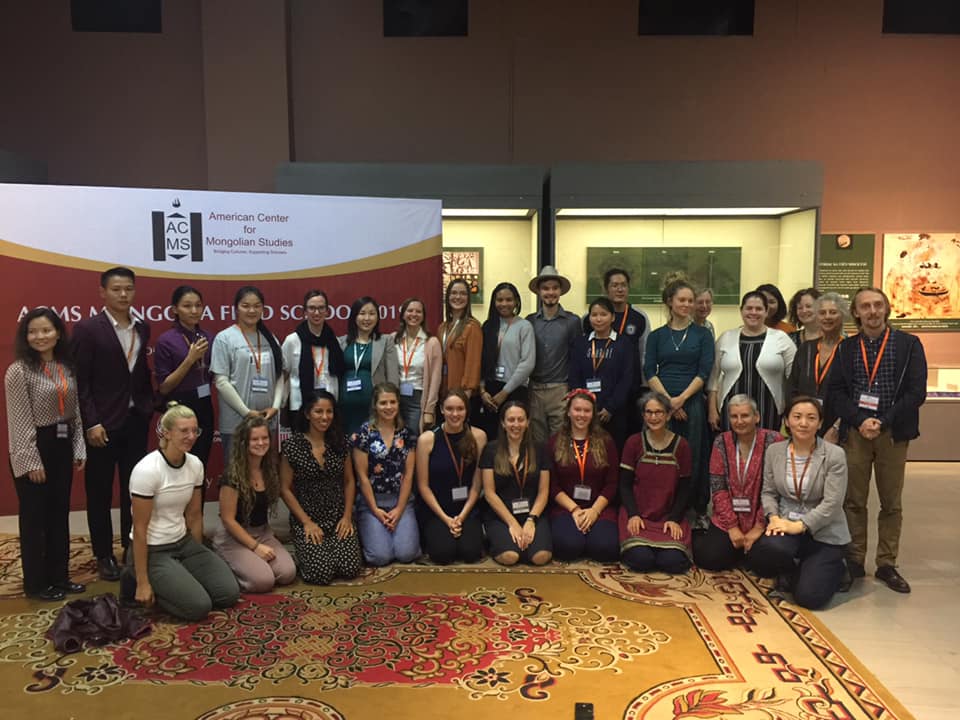
Migration and Livelihoods in Mongolia, a field course by American Center for Mongolian Studies

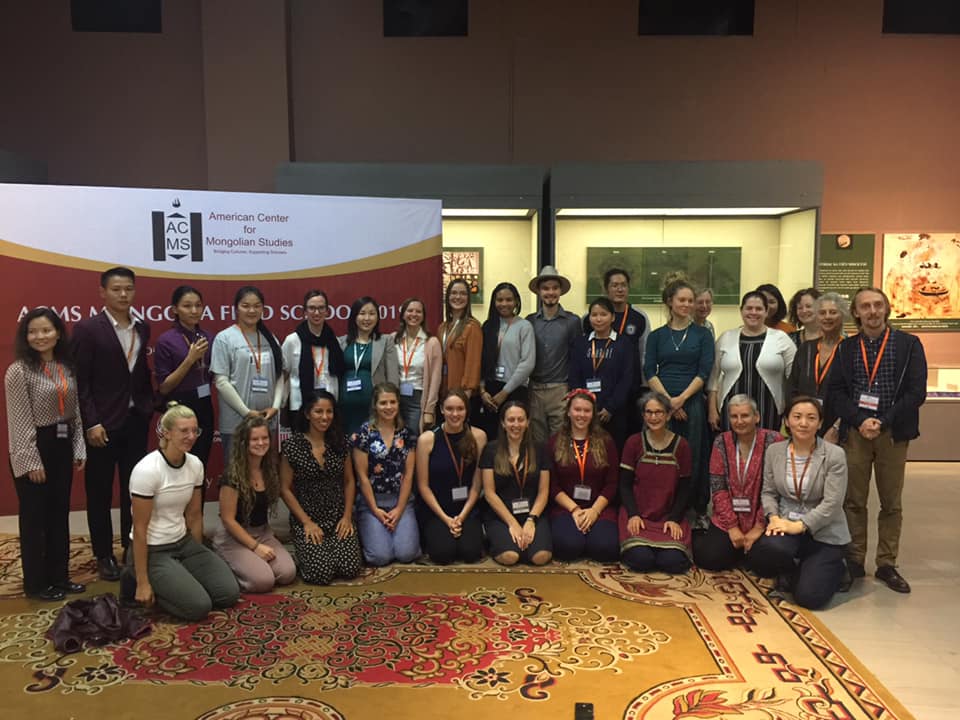
I made it to Ulaanbaatar on July 27th to first join the American Center for Mongolian Studies’ summer field school project on the topic of Migration and Livelihoods in Mongolia. The first annual interdisciplinary Mongolia Field School has been hosted in Ulaanbaatar and field sites near Lake Hovsgol in northern Mongolia. 

My interests for joining the field school were the following: while migration can be seen in the landscape and in geographies, understanding challenges, hopes and decision-making processes that informs migration in Mongolia is fundamentally an anthropological work. That is: understanding people’s behaviors, motivations and choices provides insights into what is reflected in the landscape. People become both part of the landscape, and in return contribute to the making of spaces. I was eager to study forms of development and urbanization with regards to improving migrant access to services. I was curious to see which theories of development drive planning in Ulaanbaatar, and if they are culturally relevant or written within a neoliberal framework. I was also curious to see how traditional Mongolian housing co-exist with, and are re-invented in an urban setting.  Overall, migration and urbanization of rural semi-nomadic peoples has serious geographical and cultural implications that can only be understood when considered hand in hand. Above all, I was curious to learn about Mongolia’s rich cultural heritage, diverse groups of peoples and minority groups, horse-culture and nomadic practices, contemporary migration practices, and religious traditions.

About the Author

Welcome to PASSEGGIO,

I am undergraduate student in Philosophy and Anthropology from McGill University in Montréal, Canada and a graduate from the Lester B. Pearson United World College, a movement which uses education as a force to unite people, nations and cultures for peace and a sustainable future. Some my other academic interests include peacebuilding; social justice; gender; feminism(s); migration; grass-root democracy; human geography; continental philosophy; Indian philosophy; and eastern philosophy. My other passions include the great outdoors, cultures, peoples, languages, dumpster diving, food sovereignty, picking and eating fruits, and living & learning in communities.

Fair winds,

Chloé